"Love the Scriptures, and wisdom will love thee." -Miles Smith

Tuesday, April 18, 2017

A Prophet with Anxiety

I feel like often we read the scriptures as if they were stories of a world separate from our own. The characters of the stories seem almost mythical by the way we tell their stories. But those people were real people, with many of the same struggles we face today. Today I was reading about Jacob, a prophet from the Book of Mormon. Jacob was born in adverse circumstances – he was born and grew up while his family was traveling through the desert. There was continual conflict between his family members that on a few occasions turned violent. It’s easy to imagine the effect these circumstances might have had on him as a youth.

A melancholy, even depressive tone is evident in Jacob’s language as he writes – “…we being a lonesome and a solemn people… did mourn out our days.” He confesses openly, “mine anxiety is great for you and ye yourselves know that it ever has been.” Could it have been that Jacob, a prophet, suffered from anxiety and depression, like so many of us do?

But as I read on, I realized that for Jacob, anxiety didn’t hold him back. It fact, I came to feel that his anxiety was one of his greatest strengths as a prophet. Consider statements of his like this: “For because of faith and great anxiety it truly had been made manifest unto us concerning our people, what thing should happen unto them. And we also had many revelations…” A recent article I read in the Ensign observed, “A positive way of looking at people who struggle with anxiety is this: the just care too much.”

Reading Jacob’s words, they are filled with emotion and love for his people. His anxiety caused him to sorrow greatly for his people but also to love them beyond what he would have been able to otherwise. His anxiety and desire for the welfare of his people led to him obtaining many revelations from God on their behalf.


I believe that anxiety can be a great spiritual strength in followers of Jesus Christ. If we let it drive us to care for each other more and to pray with more earnest desire, it can bring us to our Heavenly Father in ways that would be impossible otherwise. To those suffering from anxiety: Your courage is great, and I admire you. Remember that Heavenly Father knows you and has given you this trial knowing of your strength and knowing of the great good you are able to do.

Monday, April 10, 2017

Christ First Loved Us

In John 4, John teaches simply: “We love [Christ], because he first loved us.” (1 John 4:19). This week I had an experience that brought me to understand what John meant. There is someone close to me who has a great debt that didn’t know how to pay. He has immense potential and yet is not on the path that will lead him to realize that potential. There is nothing that I want more than for him to have the blessings of the gospel in his life. But more than that, I hope to see the great good in the world that can come about because of his efforts. He is one of the most generous people I know, and takes care of those he loves.

Thinking about this person, who I love, I gained an insight into how Christ might have felt when performing the atonement. On the one hand, he was making a great sacrifice – he took upon himself all of our sins without the guarantee that we would accept the blessings of it. On the other, he looks on us with perfect hope – a perfect vision of our potential. In other words, “he first loved us,” before we proved our faithfulness to him. He took upon himself suffering “how sore you know not, how exquisite you know not, how hard to bear you know not” (Doctrine and Covenants 19:15) because he believes that we will reach our fullest potential. If he was willing to bear all that because of what he saw that we could become, how much more should we strive to see that in ourselves and fulfill what he sees in us? That is how we love Him.


Seeing Christ’s atonement this way makes me believe that he sees more good in me than I can see in myself. I now understand what John meant when he said, “We love him, because he first loved us.” I have a testimony that each of us has good within us, and that the best way we can thank Christ for his sacrifice is by striving to realize our fullest potential. That is why Christ laid down his life for us. That is how we can show our love for Him. And by fulfilling our greatest potential, we can bring him joy.

Saturday, April 1, 2017

To Pray like Nephi


This week I undertook to change a weakness in my spiritual armor: prayer. I pray, morning and night, but those prayers often feel to me superficial, self-centered, and distracted because of my worldly preoccupations -- school, money, etc.


I was reading in The Book of Mormon, 2 Nephi chapter 4, trying to figure out how Nephi was able to pray with so much power. Nephi was a prophet, and it seemed like he always knew exactly what the Lord wanted him to do. One of his gifts seemed to be asking God questions and gaining answers. But in 2 Nephi 4 I learned what attributes he had that led him to such powerful prayers. Nephi tells us, “my heart sorroweth because of my flesh [or sins], my soul grieveth because of mine iniquities [or wrongdoings]. I am encompassed about because of the sins which do so easily beset me.” Nephi recognized how easily he gave in to little sins – being angry or frustrated with a family member, becoming self-centered or impatient.
Image result for Nephi prays

I doubt that Nephi’s sins were anything huge, but I believe that he recognized his weaknesses better than most of us do. I think that when he went before the Lord to pray, he felt truly burdened down, but went with confidence – knowing that calling on God, God would help him. In my life, I want to follow Nephi’s example, and examine my life more fully, to discover the mistakes I make and let myself be humbled by them. By going to pray with more humility, I know that I can be more prepared to receive the counsel that God would like to give me.

I think that by doing so, I will be more focused on how I am doing at being a disciple of Jesus Christ. As my prayers become focused on improving my discipleship, I hope my perspective will change and become more focused on the most important things – my relationship with God and the people around me.

Saturday, March 25, 2017

Trying to Avoid being a Pharisee

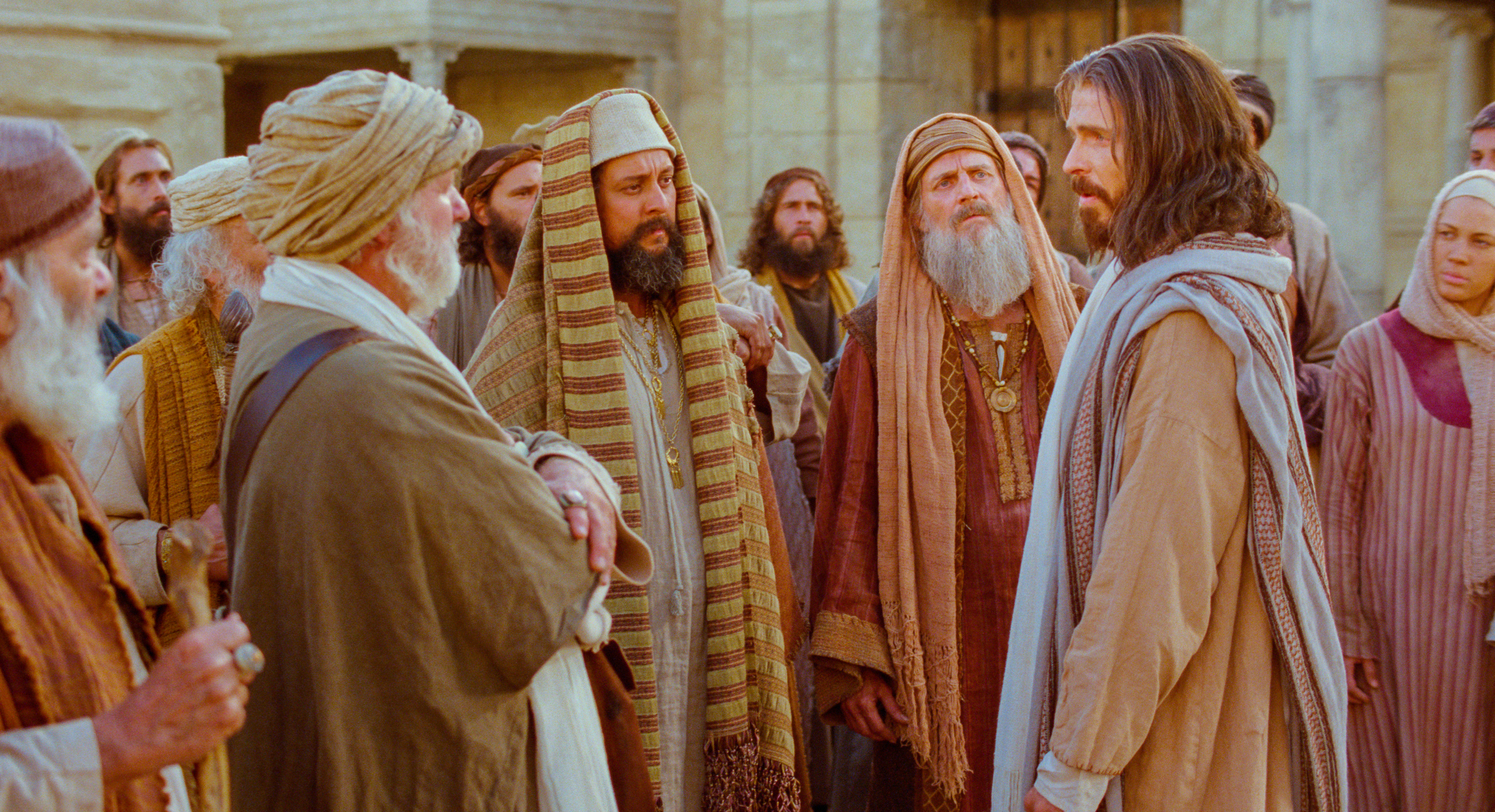
This week in our "Christ and the Everlasting Gospel" class, we were learning about the Pharisees -- the learned, upper class of Jewish society. About halfway through the class it struck me that many of the things for which the Savior condemned the Pharisees applied to me as well! So I focused my study this week on the weakness and tendencies that were common to the Pharisees and how to overcome them. I learned that many of their follies had to do with pride and not repenting. The solution surprised me, and is simple: receive the prophets that the Lord sends.

Image result for christ and the phariseesAmong the Pharisees' weaknesses were doing "holy" things so that other people would see them and hypocrisy -- holding others to a high standard but failing in their own duties. They would wear large pieces of religious symbolism on their bodies and make their religious clothing extra fancy so people would notice more their "righteousness." How often do I do the same? I read my scriptures on campus, and sometimes catch myself hoping that someone I know sees me. Or sometimes when I give a lesson, I relish the compliments afterwards more than I reflect with gratitude on the inspiration that Heavenly Father gave me in preparing the lesson.

So what is the remedy? After Christ condemns the Pharisees all throughout Matthew 23, he concludes by teaching them the principle of how to stop being Pharisees. He queries, "how can ye escape the damnation of hell?" and then answers his own question: "Wherefore, behold, I send unto you prophets, and wise men... I say unto you, Ye shall not see me henceforth, till ye shall say, Blessed is he that cometh in the name of the Lord."

I'm not sure yet why it is that receiving the prophets will prevent sins, from hypocrisy to vanity, But I am going to try it out. This coming weekend is general conference and I am going to do my best to receive the prophets. I will prepare by coming up with questions and reviewing the talks of last conference. I hope that by doing so Heavenly Father will help me overcome my Pharisee-like sins that take place in my heart.

Monday, March 20, 2017

Inviting Grace into our Lives

This week I was pondering on Ether 12:27 in the Book of Mormon, where Christ is speaking to Moroni. He tells him: “If men come unto me, I will show unto them their weakness. I give unto men weakness that they may be humble; and my grace is sufficient for all men that humble themselves before me…” I was thinking about that passage, and compared it to Christ’s commandment in 3 Nephi 12:48 (and Matthew 5:48) in which he commands us to be perfect.

Christ commands us to be perfect yet tells us that his grace is sufficient for us if we are humble. To me this teaches the principle that there is a difference between qualifying for his grace and being perfect. We cannot fulfill his commandment to be perfect on our own. But we can humble ourselves and qualify for His grace.


This principle helped me understand the commandments better. Some commandments seem like they teach what Christ wants us to be – to be filled with charity, to be perfect, to be sanctified. Other commandments have to do with what he wants us to do – pray, read the scriptures, be baptized. I think those “do’s” are what we need to do to invite grace into our lives, and the “be’s” are what He can make of us if we invite his grace into our lives. This helps me because it makes me rely less on myself and think less that I do everything on my own. I can’t make myself perfect, but I can do the things that invite grace into my life. I have a testimony that by praying and reading the scriptures I feel closer to the Savior and feel more enabled by His grace. And I have faith that by inviting his grace into my life that one day I will be filled with charity and be like Him.

Sunday, March 12, 2017

He that humbleth himself shall be exalted

This week I read the parable of the wedding feast. Christ observed that when people were invited to wedding feast, they would vie for a place in one of the “chief rooms,” or positions of honor. He counseled them, “When thou art bidden of any man to a wedding, sit not down in the highest room… but when thou art bidden, go and sit down in the lowest room… for whosoever exalteth himself [lifts himself up] shall be abased [brought down]; and he that humbleth himself shall be exalted.” (Luke 14:8-11) To me this teaches the principle that we should not try to look better than we actually are, but that we should be honest about our shortcomings.

I was pondering how often I feel like the people invited to the wedding, trying to take the best spot in the house, and realized it was a lot like how we often try to impress people we admire. As a student hoping to get a good job, it can be tempting to inflate my qualifications to look better to a potential employer. Especially in interviews, I have found myself trying to cover up the gaps in my experience and act more fit for the job than I may in reality be.

I realized that this same principal relates to our relationship with Jesus Christ.

How would we respond in an interview if we knew that the interviewer already knew all of the answers? I think I would be meeker about my weaknesses, and lay them out openly before him. I would ask Him to teach me and fill in the gaps in my experience. I might even ask this all-knowing interviewer what He saw that I could improve, that would make me more fit for his company (or kingdom). I would commit to learning and would set a goal to learn what he had to teach me.

Every night we have the opportunity for a personal interview with our Heavenly Father. How do we use that time? Do we boast to Him of the good we’ve done that he already knows? Or do we reflect on our weaknesses and pray for opportunities to overcome those weaknesses? I hope to improve my prayers by seeking to be taught rather than seeking to be justified. 

Monday, March 6, 2017

The Seed Sown among Thorns


This week in religion class we learned about the parable of the sower – or as Brother Griffin put it, the parable of the soil. It his opinion, the soil was the main focus of Christ’s teaching, and I agree.

Before I share this interpretation of the story, I want to say that this is one lens through which we can view the parable. There could be (and probably are) more meanings that Christ was trying to teach.

Image result for seed sown among thorns ldsThe seed could be considered to be the word of God. It was sown, or spread, in four different types of soil. The soil represents the condition of our heart. The first one fell on the hard beaten path, and was eaten by birds before it could take root. Another fell among stones and grew quickly, but then was scorched by the sun and died. The third seed feel among thorns, and grew up, but was choked out by the thorns that surround it. Christ interprets this to mean, “He that received seed among the thorns is he that heareth the word; and the care of this world, and the deceitfulness of riches, choke the word, and he becometh unfruitful” Matthew 13:22.

To me this teaches the principle that the seed may fall upon good soil. That is, our heart can be sincere and we can desire to be good. But even if our heart is good, we can be distracted and let thorns grow up in our soil – and if those thorns become too strong, they can deprive the good seed of nutrients. In other words, if we let distractions and the cares of this world consume our attention, we may neglect to obey God’s commandments and to serve the people around us. It isn’t that we don’t want to be good, we just get distracted from what is right.

I feel that most of the people I know (including myself) fall into the category of the seed sown among thorns at one time or another. It seems that there are always thorns springing up that seem to demand my attention more urgently than scripture study and personal prayer – social events, work, money, and worries about the future. But I have faith that if I take time to nourish my testimony and if I prioritize service to my friends and the people around me, those other things will fall into place. More importantly, my heart will become fit to live with God again. I'm not there yet, but that is my goal.